Scottsdale Property Taxes Explained for Relocating Homebuyers
Buying a home in Scottsdale means looking beyond the list price. Your mortgage payment matters, but so do homeowners insurance, HOA dues, utilities, maintenance, and annual property taxes. For buyers relocating from higher-tax states, the numbers can look refreshingly manageable, but Arizona’s tax system works differently than many people expect.
Scottsdale property taxes are based on the specific parcel and its taxing jurisdictions, not a single citywide percentage. That is why two homes with similar prices, even in the same zip code, can carry noticeably different tax bills. The smartest move is to review the actual current tax bill before you write an offer.
The Quick Answer on Scottsdale Property Taxes
| What affects the bill | Why it matters | What buyers should review |
|---|---|---|
| Limited Property Value | Usually drives the taxable value | Current and prior-year values |
| Property classification | Influences the assessment ratio | Owner-occupied, second home, or rental use |
| Taxing districts | Rates vary by parcel | School, city, county, and special districts |
| Property changes | Can affect taxable value | Additions, lot changes, or use changes |
| Closing proration | Splits the current-year bill | Settlement statement and tax credit |
The formula is straightforward, even if the terminology is not. Maricopa County calculates ad valorem property tax by multiplying the Limited Property Value by the assessment ratio, dividing by 100, then multiplying that result by the combined primary and secondary tax rates. You can review the county’s official explanation on the Maricopa County Treasurer’s Office.
The important takeaway is this: do not estimate a Scottsdale tax bill by multiplying the purchase price by a generic tax rate. The prior tax bill is a useful planning tool, but it is not a guarantee of what you will pay in future years.
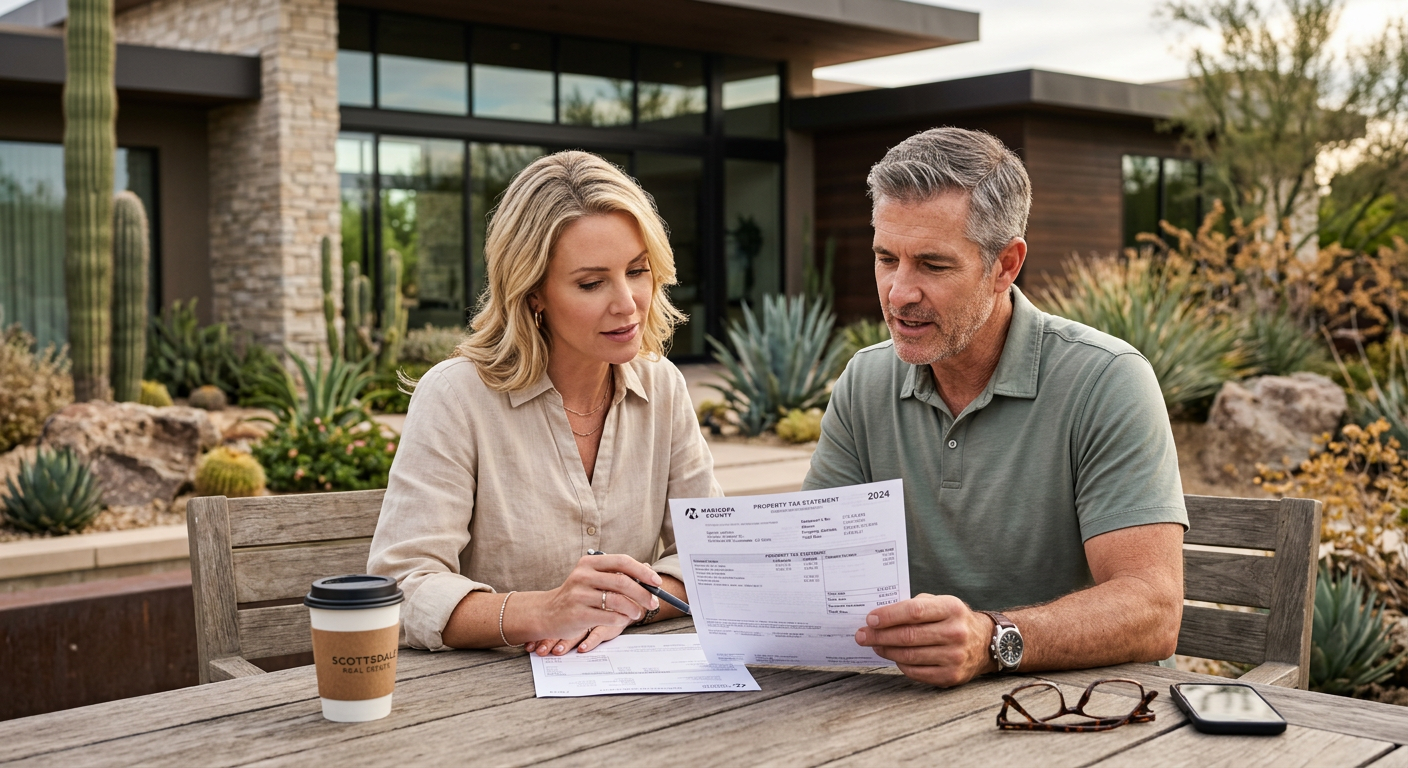
How Scottsdale Property Taxes Are Calculated
Arizona separates market-oriented value from taxable value. Understanding that distinction makes property tax statements much less intimidating.
Full Cash Value Is Not Usually the Taxable Number
Full Cash Value, often shown as FCV, is the Assessor’s estimate of a property’s market value for tax purposes. It may be different from the price you paid, the price a neighbor paid, or a lender’s appraisal. It is an assessment figure, not an automatic prediction of resale value.
For most Scottsdale homes, taxes are generally calculated from Limited Property Value, or LPV, rather than FCV. The Maricopa County Assessor’s LPV guide explains that LPV cannot exceed FCV and, for many properties under Rule A, it generally increases by no more than 5% per year unless a statutory exception applies. That 5% limit applies to the taxable value calculation, not necessarily to the final dollar amount of the tax bill.
Assessment Ratio Converts Value Into Assessed Value
Next, the county applies an assessment ratio tied to the property’s legal classification and use. That produces the assessed value used in the tax calculation. A primary residence, second home, rental property, commercial property, and vacant parcel may not be treated the same way.
This matters for relocation buyers who may initially purchase a Scottsdale property as a second home, later rent it out, or convert a rental into their primary residence. Changes in use can affect classification and, in certain situations, how LPV is calculated. Before making a strategy decision, speak with your tax advisor and confirm the property’s current classification through the Assessor.
Multiple Taxing Districts Make Up the Final Bill
Your bill is not simply a “Scottsdale tax.” It can include amounts for school districts, Maricopa County, the City of Scottsdale or another municipality, community colleges, flood control, library services, fire districts, and other applicable special districts.
According to Maricopa County’s property tax bill guide, school district taxes are generally the largest component, followed by cities, community college districts, special districts, and the state. That is why a Scottsdale mailing address alone does not tell us enough. Parcel location and district boundaries matter.
Why Taxes Can Differ Across Scottsdale Zip Codes
Zip codes are helpful for understanding lifestyle, commute, home styles, and neighborhood identity. They are not a dependable shortcut for estimating property taxes.
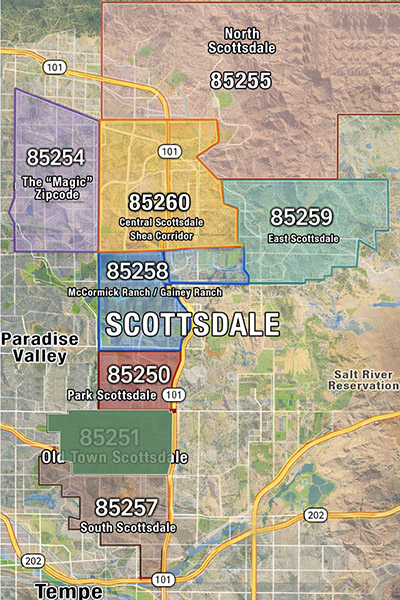
A home in 85251 near Old Town may have a different set of districts and ownership costs than a home in 85255 near DC Ranch or Grayhawk. Likewise, a property in 85254 may have a Scottsdale mailing address but sit within Phoenix city limits, a detail that can affect municipal services and tax jurisdictions. Our Scottsdale zip codes guide helps buyers understand why location details should come before assumptions.
Here is what we recommend comparing between homes:
- The most recent full-year property tax bill
- Limited Property Value and Full Cash Value
- Property classification and any known use changes
- The listed taxing districts and their individual charges
- HOA dues, special assessments, insurance, and maintenance costs
- Whether the home is in Scottsdale, Phoenix, Paradise Valley, or an unincorporated county area despite its mailing address
For example, a lower tax bill on an older home may reflect its existing LPV history, while a nearby remodeled or newly constructed home may have a different value profile. The better question is not “Which Scottsdale zip code has the lowest taxes?” It is “What are the complete, parcel-specific ownership costs for the homes we are comparing?”
What Relocating Buyers Should Check Before Making an Offer
Here’s the thing: taxes are only one part of affordability, but they can expose a gap between a home’s apparent cost and its actual monthly carrying cost.
Request the Current Tax Bill and Compare Prior Years
Ask for the current tax statement and, when available, prior-year tax history. Look for major changes in LPV, assessed value, taxing-district charges, exemptions, or classification. If the tax number seems unusually low or high compared with similar homes, it deserves a closer look.
You can also use the county’s official property-tax lookup tools to confirm payment status and billing information. For the 2026 tax year, Maricopa County made property tax records available on September 14, 2026, and tax bills are generated in September.
Understand Payment Timing and Mortgage Escrows
For tax bills over $100, Maricopa County generally allows two installments. The first half is due October 1 and, for the 2026 tax year, becomes delinquent after 5:00 p.m. on November 2, 2026. The second half is due March 1 of the following year and generally becomes delinquent after 5:00 p.m. on May 1.
If you have a mortgage escrow account, your lender or loan servicer may pay the bill. You may still receive an informational statement from the county, so do not assume something is wrong just because a bill arrives in your mailbox. Confirm the arrangement with your lender before you make a duplicate payment.
Expect Taxes to Be Prorated at Closing
At closing, property taxes are commonly prorated between the buyer and seller. The seller typically receives responsibility for the portion of the tax year they owned the home, and the buyer receives a credit or debit through the settlement statement based on the closing date.
Review the settlement statement carefully. It will show how the title company handled the tax proration, but it does not eliminate your responsibility to budget for future tax bills after closing.
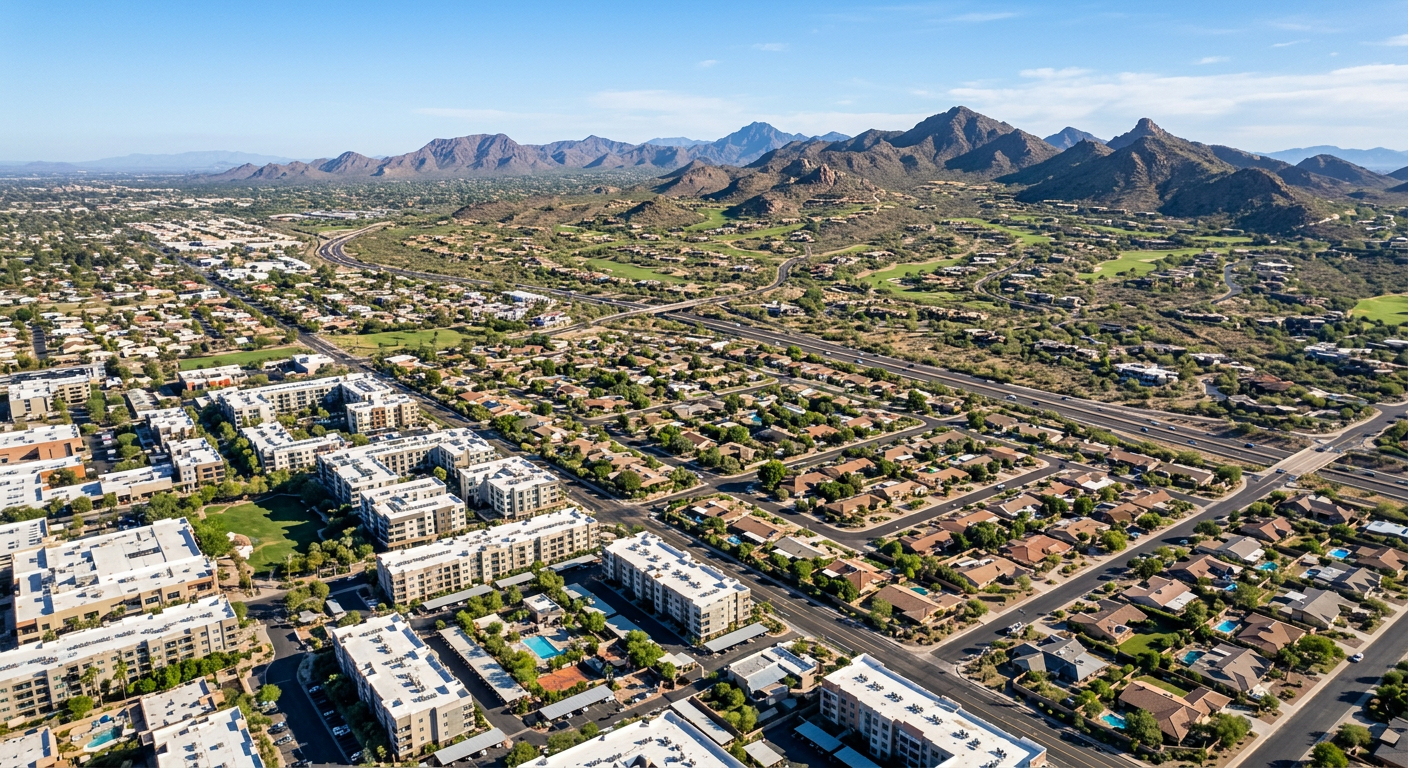
Property Taxes and the Bigger Scottsdale Ownership Budget
A buyer deciding between South Scottsdale, central Scottsdale, McCormick Ranch, 85254, and North Scottsdale should compare the entire ownership picture. A condo near Old Town may have a lower-maintenance lifestyle but higher HOA dues. A larger North Scottsdale home may offer more space, views, and privacy, while requiring more for landscaping, pool care, utilities, and insurance.
That broader analysis is especially important if you are weighing Scottsdale against another nearby city. Our comparison of Scottsdale vs. Phoenix for living explains why city name and purchase price alone do not reveal the full lifestyle or cost difference. For a more complete relocation budget, pair this tax guide with our Moving to Scottsdale guide.
Families should also confirm school assignments directly rather than relying on a neighborhood name or listing description. District boundaries can shape both your daily routine and the taxing districts shown on a bill. Our Scottsdale school district map guide is a useful starting point for comparing areas.
Common Questions About Scottsdale Property Taxes
Are Scottsdale property taxes based on the home’s purchase price?
Not directly. Most residential property taxes are generally based on the property’s Limited Property Value, assessment ratio, and applicable combined tax rates. A sale price may be relevant to future valuation work, but it does not function as a simple automatic tax reset.
Why did a Scottsdale home’s tax bill go up if market values fell?
The tax bill can change because LPV, tax levies, tax rates, or property classification changed. LPV and market-oriented Full Cash Value are different figures, so one can rise while the other falls.
Does buying a second home in Scottsdale change property taxes?
It can affect the property’s classification and tax treatment, depending on how the home is used. Buyers planning to use a home as a second residence, rental, or short-term rental should confirm classification details with the Assessor and seek advice from a qualified tax professional.
Are property taxes lower in Scottsdale than in Phoenix?
There is no reliable citywide answer for an individual buyer. Taxes depend on the parcel, local taxing districts, value history, and classification. Compare actual tax bills for specific homes, especially when evaluating Scottsdale addresses near municipal boundaries.
Can I appeal my Scottsdale property value?
Property owners can appeal the Assessor’s Full Cash Value through the applicable process and deadlines. Limited Property Value itself is generally not appealable. Read your Notice of Value promptly and use the Maricopa County Assessor for current filing instructions.
Who do I contact about an incorrect tax bill or a missing payment?
Contact the Assessor for questions about property value, classification, and exemptions. Contact the Treasurer for billing, payment status, delinquency, and tax collection questions. Separating those roles saves time and gets you to the right answer faster.
Build Your Scottsdale Budget Around the Real Numbers
The most useful way to understand property taxes is to treat them as a parcel-level expense, not a citywide estimate. Review the actual bill, understand the home’s use and tax history, and compare taxes alongside HOA fees, insurance, utilities, upkeep, and the neighborhood lifestyle you want.
When we help buyers relocate, we start with the areas that fit their commute, household needs, school preferences, and day-to-day lifestyle. Then we compare homes using the full cost of ownership, because the right Scottsdale home should work on paper and in real life.
Talk With Kelie About Your Scottsdale Move
If you are comparing neighborhoods, tax bills, and ownership costs from out of state, we can help you narrow the options before you spend weekends touring homes that do not fit. Talk with Kelie about your move: Contact Bemo Homes.
About Bemo Homes
Bemo Homes is a Scottsdale-based real estate team focused on helping buyers find the right neighborhood, lifestyle, and home in Scottsdale and the surrounding Phoenix area. Led by Kelie Bemo, Bemo Homes specializes in relocation guidance, neighborhood breakdowns, zip code insights, school and safety information, and helping buyers understand where to live before making a move.
Bemo Homes also includes Brian Bemo as part of the team, giving buyers added support through local guidance, strategy, and a strong digital real estate experience. The website, content, and marketing strategy are powered by Bemo Design.
Whether you are moving from out of state, upgrading, buying a second home, or comparing the best Scottsdale neighborhoods for your lifestyle, Bemo Homes provides the kind of local insight and one-on-one support you will not get from generic home search websites.
Start here:
Where to Live in Scottsdale
Moving to Scottsdale Arizona
Schedule a Scottsdale Relocation Consultation
Main Contact:
Talk with Kelie about your move: Contact Bemo Homes